Water play is the highest-value sensory activity there is, and Edmonton gives you roughly eight reliably warm weeks to do it outdoors. We plan around that.
What water actually teaches
Volume and capacity, most obviously — a child pouring between containers is doing physical mathematics that no worksheet reaches. Cause and effect. Flow, floating, sinking, absorption.
It is also the most reliably calming activity we have. A child who is dysregulated will settle at a water tray faster than anywhere else, which is why we keep one available indoors year-round.
The setup
You need less than you think. A shallow tub or a washing-up bowl, and:
- Jugs, cups, and containers of clearly different sizes
- A funnel
- A turkey baster or a pipette — endlessly fascinating and excellent pincer grip practice
- A sieve or colander
- Things that float and things that sink
- A sponge
Add a squirt of soap for bubbles, or a few drops of food colouring, and the same tub becomes new.
Rules that make it workable
Water stays in the tub — and then accept that it will not. Set up somewhere it does not matter, or outdoors. Old clothes. A towel down at an indoor tray.
And never leave a young child unsupervised near water, including a shallow tub. This is not a background activity.
Winter version
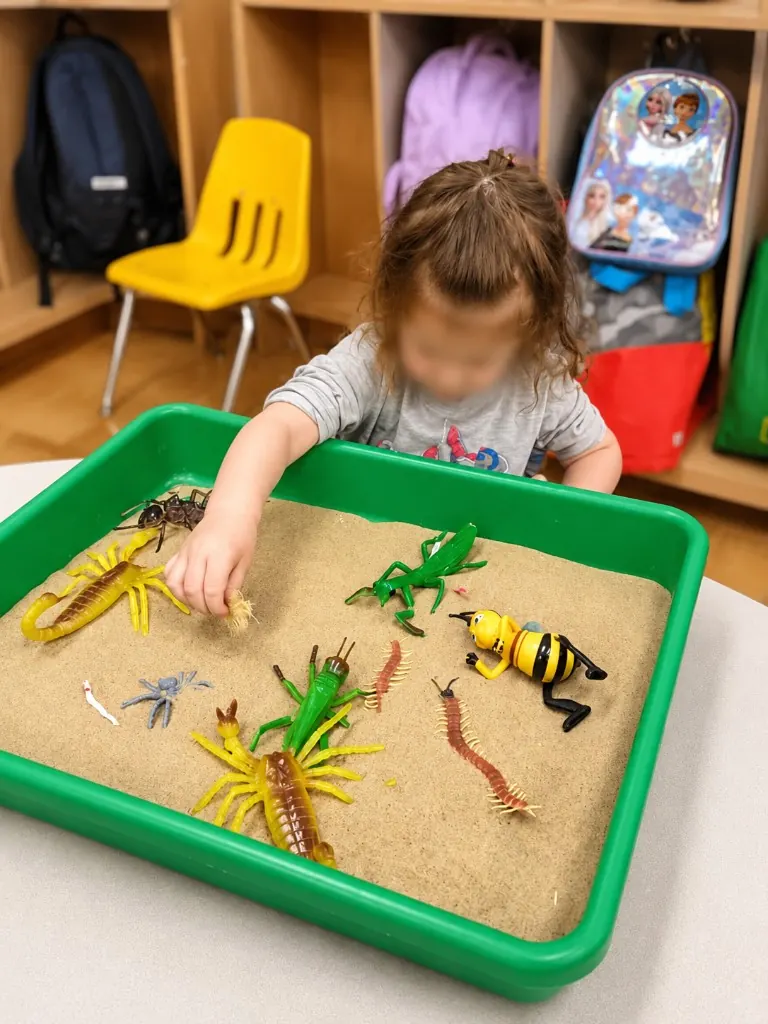
Indoors we swap water for other sensory trays — dry rice, dry pasta, sand, or in January, actual snow brought inside in a tub, which is a genuinely brilliant twenty minutes.