
Our approach
Play is the method. Learning is the point.
Play-based learning gets a bad name when it means nothing is being taught. Here it means the opposite: children are absorbed for most of the day, and inside that absorption we teach specific skills, deliberately, in short focused blocks.
What we believe
Six principles
that shape every day.
Not a philosophy poster. These are the decisions that change what actually happens in the room at 9:30 on a Tuesday.
Follow the child, then teach on purpose
Planning starts from what the children are genuinely interested in this month. Then, inside that interest, we teach specific skills deliberately — because letters, numbers, and pencil grip do not appear on their own.
Routine is what makes a child brave
The same shape of day, every day. Children who know what comes next spend their energy exploring instead of bracing. That predictability is why settling-in works.
Educators sit inside the play
Not supervising from the edge of the room. An adult on the floor asking one good question turns stacking blocks into measuring, comparing, and negotiating.
Conflict is the curriculum
Hitting, snatching, and exclusion are not behaviour problems to be stamped out — they are the exact moments social skills get built, if an adult is close enough to coach both children.
We tell you the truth
Twice a year you get a written summary of what we are seeing and what we are working on, plus a conversation at pickup whenever something matters. Vague reassurance helps nobody.
School readiness is a habit, not a worksheet
Sitting through a group story, following a two-step instruction, finishing a task, tidying up. These are what kindergarten teachers notice first, and they are practised here every day.
What we cover
Six strands,
woven through the day.
Each one with a concrete example of what it looks like in practice — because a curriculum heading tells you nothing about a Tuesday morning.
Literacy & phonics
Letter names and sounds in a deliberate order, plus rhyme, syllables, and first-sound isolation. Print appears everywhere in the room — labels, name cards, a writing centre with real paper — so children want to use it.
What that looks like
A four-year-old finding the letter that starts their own name on the snack chart.
Numbers & early math
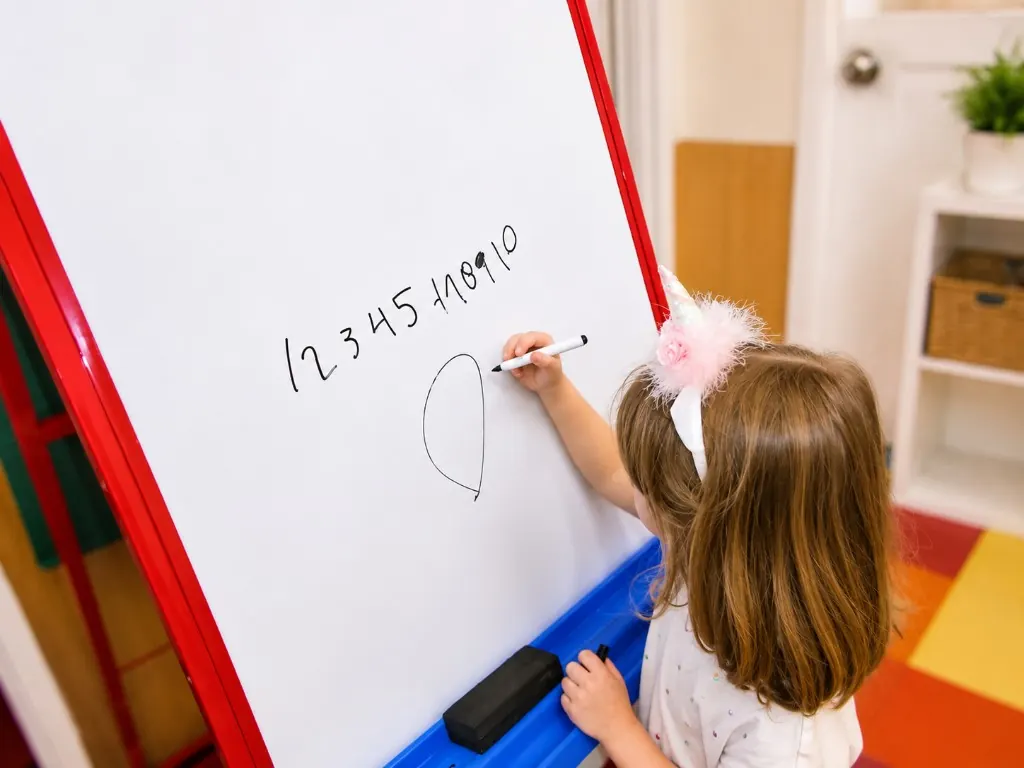
Counting with one-to-one correspondence, number formation, sorting, comparing, and patterning — all with objects children can hold, before anything goes on paper.
What that looks like
Counting out cups so everyone at the table gets exactly one.
Fine motor & handwriting
Dough, tongs, threading, scissors, and tracing. The physical ability to control a pencil is trained separately from the idea of writing, because the two develop at different rates.
What that looks like
Squeezing a spray bottle to water the plants — grip strength disguised as a job.
Social & emotional skills
Naming feelings, asking for a turn, joining a game, and repairing a friendship. We stay close during conflict and give children the words rather than simply separating them.
What that looks like
"You can tell him you are still using it" — said quietly, at eye level, in the moment.
Science & the natural world
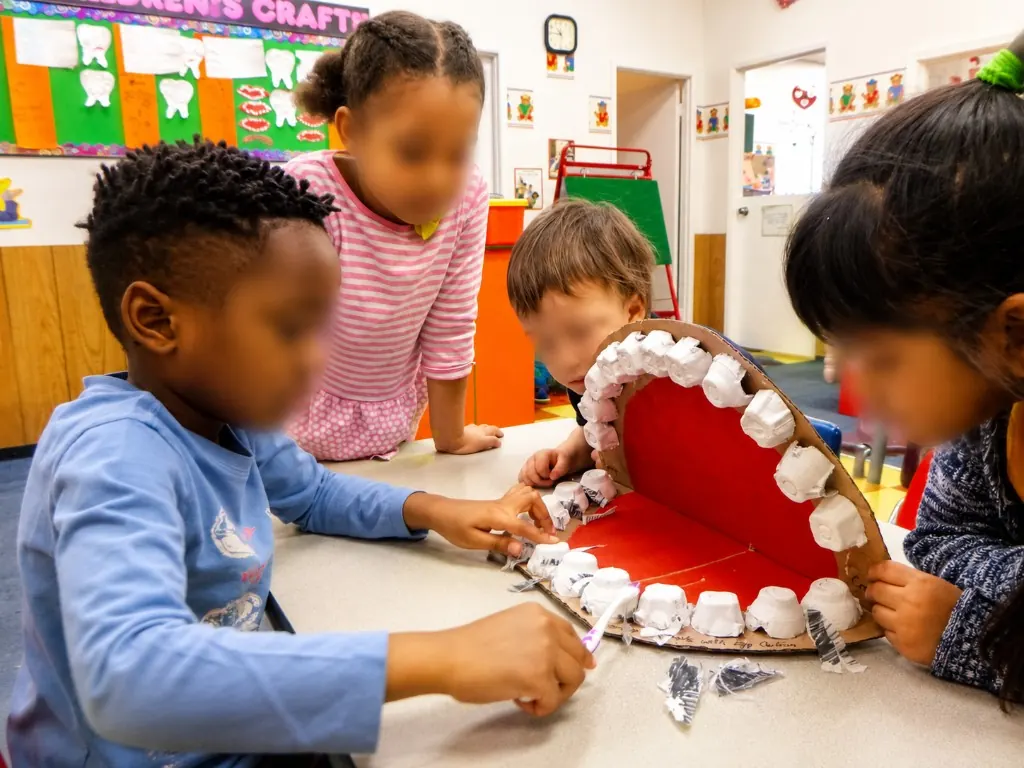
Insects, weather, the human body, seasons, habitats. Real materials, magnifying glasses, non-fiction books, and a walk outside to find whatever we have been reading about.
What that looks like
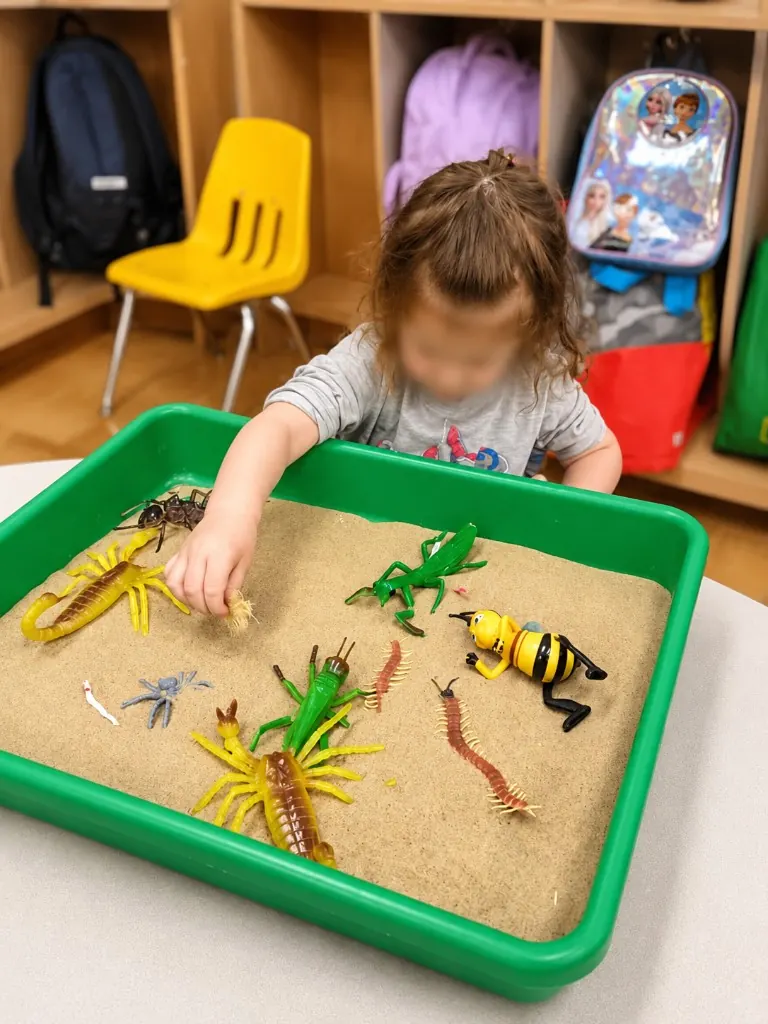
A sand tray full of model insects, then twenty minutes hunting for real ones.
Play, movement & the arts
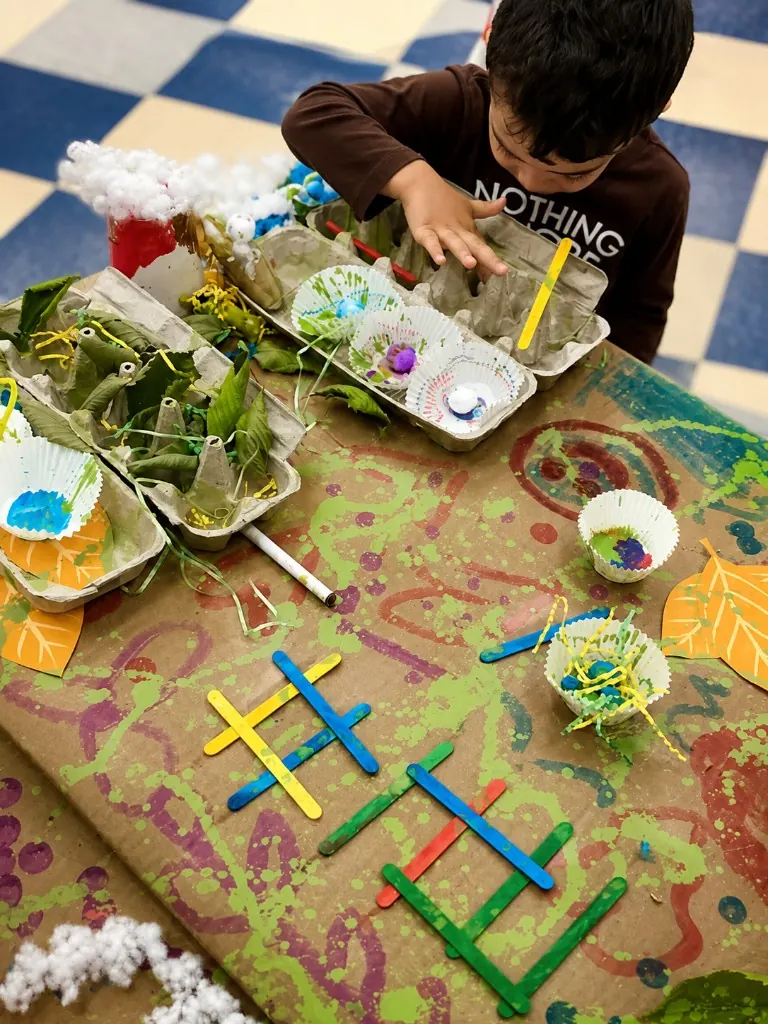
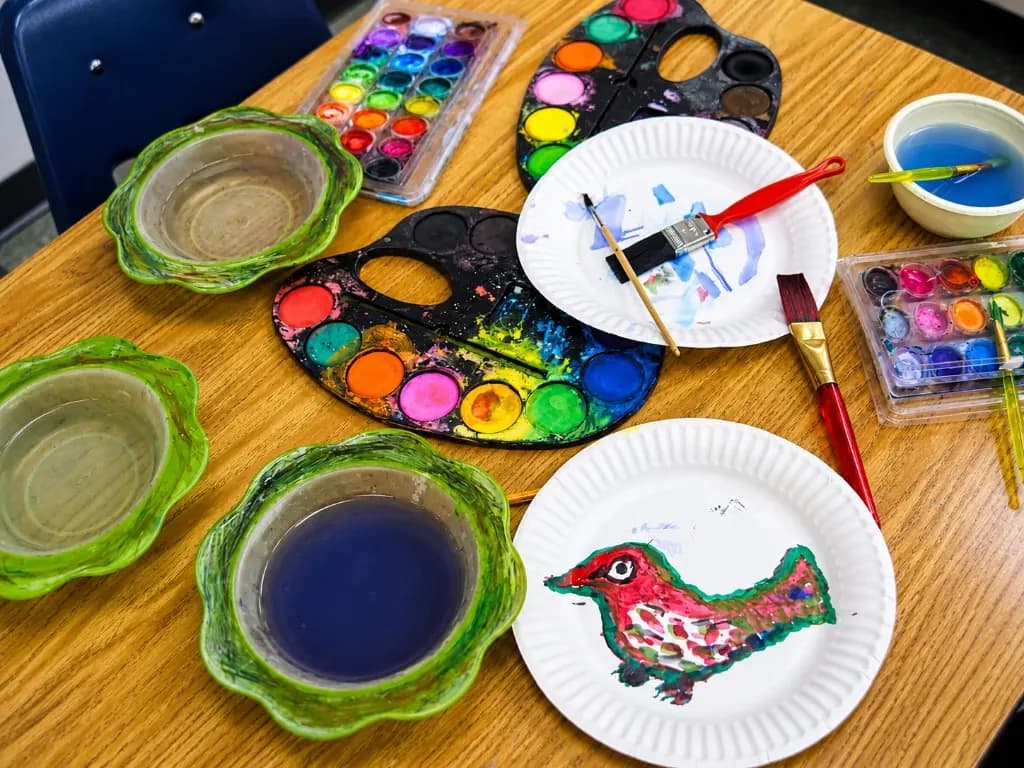
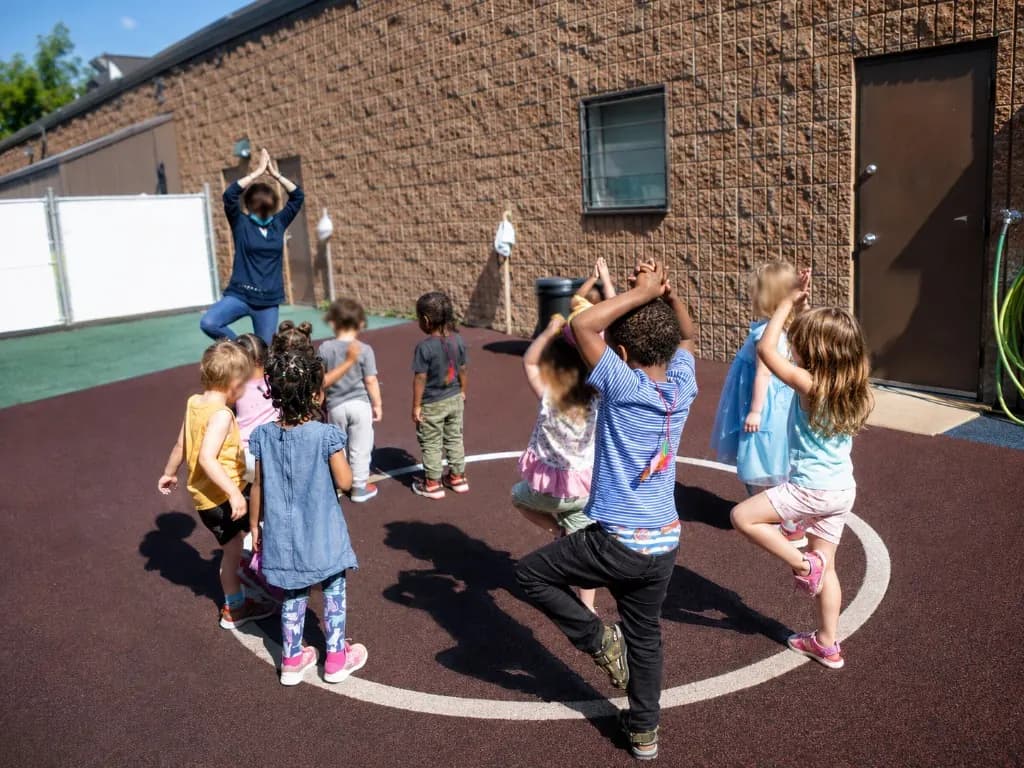
Long uninterrupted stretches of block play, dramatic play, painting, music, and gross motor time. This is not the reward after the learning — it is where most of the learning happens.
What that looks like
A block tower that survives three days because we left it standing.
In practice
This is what it
looks like in the room.
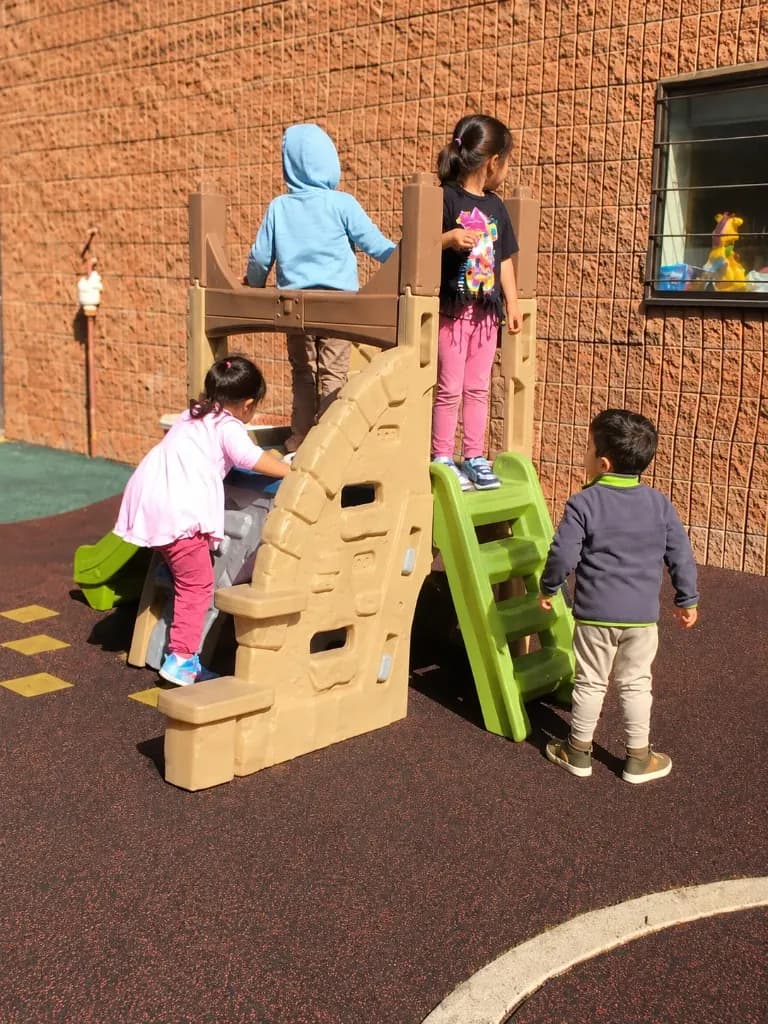
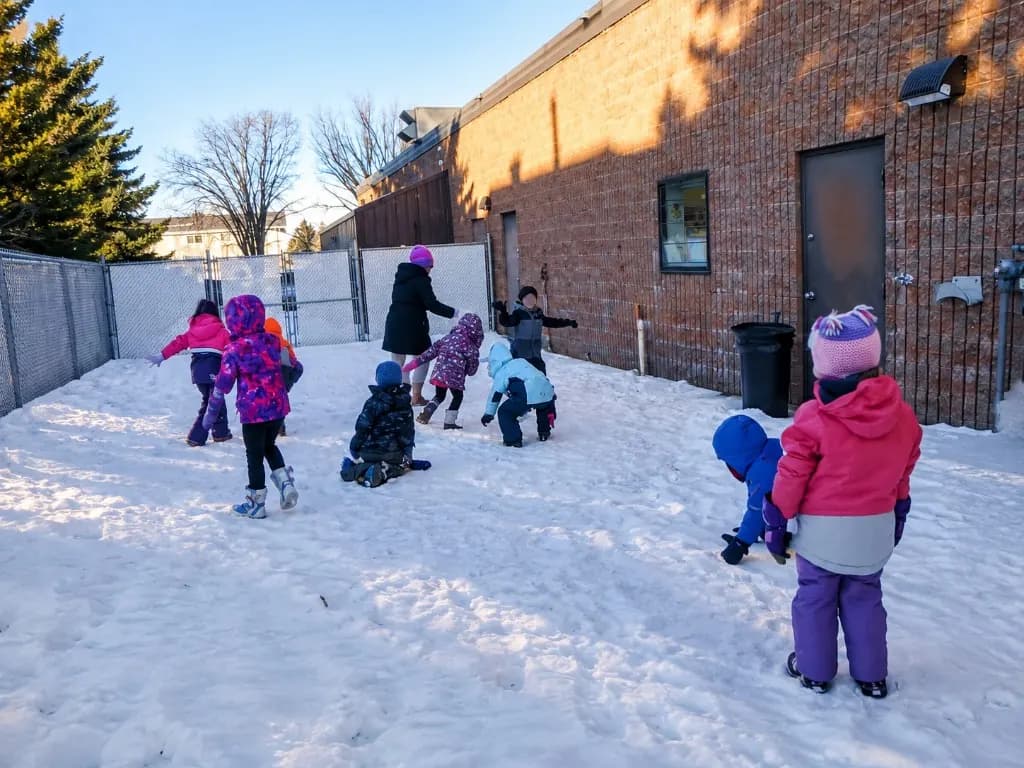
Ordinary weekday mornings at Ideal — numbers on a whiteboard, a nature collage, an insect investigation, outdoor stretching.
How you will know it is working
You get the real picture,
twice a year, in writing.
A developmental summary that says which letters and sounds your child has, how they are handling group time, what they choose to play, and what we are working on next. If something is behind, we say so — early enough for it to matter.
A daily conversation
Two minutes at pickup about what actually happened — not a wave from the doorway.
Infant and toddler daily reports
Bottles, diapers, sleeps, meals, and one small moment from the day.
Written developmental summaries
Twice a year, with specifics you can act on at home.
A weekly note in Academic Pre-K
What was taught that week and exactly how to reinforce it in five minutes at home.
See it for yourself
Come at 9:30 on a weekday.
That is when you will see it properly.
Every room running, educators on the floor, and children mid-project. Ask us anything while you are here.
Prefer to message? Email idealdaycareedmonton@gmail.com.
- Open
- Mon – Fri — 6:30 AM – 6:00 PMSaturday — ClosedSunday — Closed
- Registration enquiries
- idealdaycareedmonton@gmail.com