An Edmonton winter runs roughly five months. A centre that keeps children indoors whenever it is cold keeps them indoors from November to March, and you can see the effect on a room by week three — the noise, the friction, the inability to settle.
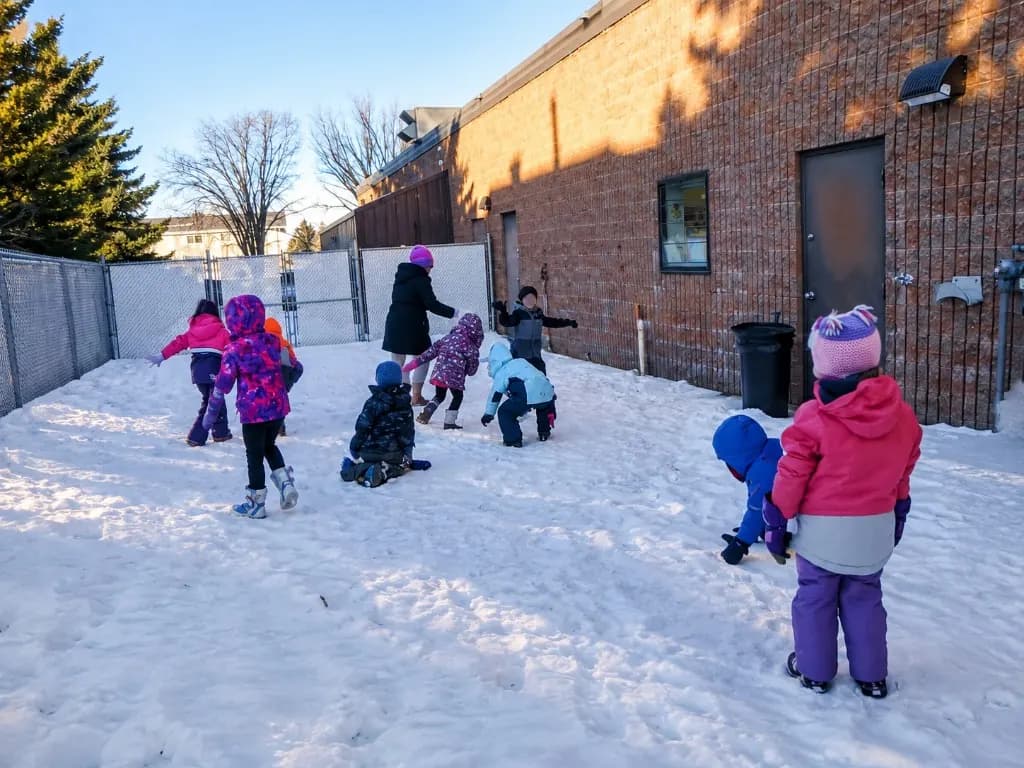
So we go out. Nearly every day.
Where the line sits
We use the wind chill rather than the thermometer, because moving air is what actually causes cold injury.
Roughly: down to about minus twenty with wind chill we go out, for a shortened period, with all the checks below. Colder than that, or in a wind warning, blowing snow, or freezing rain, we stay in and run gross motor activity indoors instead. Younger children come in sooner than older ones.
It is a judgement call made by the educators in the room on the day, not a rule read off a chart. A still minus eighteen with sun is a genuinely pleasant twenty minutes. A minus twelve with a hard north wind is not.
What outdoor time in winter is actually for
Three things, and none of them are "fresh air" in the vague Victorian sense.
Gross motor development. Walking on uneven snow, climbing a drift, pulling a sled, keeping balance on ice — these load the body in ways a carpeted room cannot. Core strength and balance built in winter show up in the spring as better pencil control, because it all comes from the same place.
Sleep and appetite. Children who have been outside eat lunch and sleep at nap time. Children who have not, do neither, and everybody's afternoon is worse.
Resetting the room. Twenty minutes outside dissolves conflicts that had been building for an hour. It is the most reliable behaviour tool we have.
The gear, honestly
This is the part that determines whether winter works. A well-dressed child has a good time at minus fifteen; a badly-dressed one is miserable at minus five.
What we ask you to send, every day from November:
- Snow pants and a proper winter coat. Not a fashion coat. A warm one.
- Two pairs of mittens. Waterproof mittens, not gloves — mittens are warmer and a three-year-old can actually get them on. Two pairs because the first will be soaked.
- A toque that covers the ears, and a neck warmer rather than a scarf. Scarves are a strangulation risk on climbing equipment and we will not let a child wear one outside.
- Winter boots, rated for cold, not rain boots.
- Indoor shoes that live here. Non-negotiable. Boots come off at the door.
- A full change of clothes, including socks. Especially socks.
And label everything. Every single item. A room of twelve children generates a startling number of identical navy mittens.
The forty-minute problem
Getting twelve toddlers into full winter gear takes a long time, and the honest reflection is that it can take longer than the time spent outside. That is not a reason to skip it.
Dressing themselves is the activity, partly. Zippers, velcro, working out which boot goes on which foot, managing frustration when a mitten will not cooperate — that is fine motor practice, sequencing, and persistence, and it is genuinely valuable. We build the time into the schedule and let children do as much of it themselves as they can stand.
You can help enormously by choosing gear a child can manage: big zipper pulls, velcro over laces, boots with wide openings and a loop at the back.
What we watch for
Educators check hands, feet, and faces during outdoor time, and any child who says they are cold comes in — no negotiation, no encouragement to tough it out. Children under two go out for shorter periods and are checked more often. We watch for the specific signs of cold stress: pale or waxy skin on cheeks and fingertips, unusual quietness, and shivering.
What we do on the genuinely brutal days
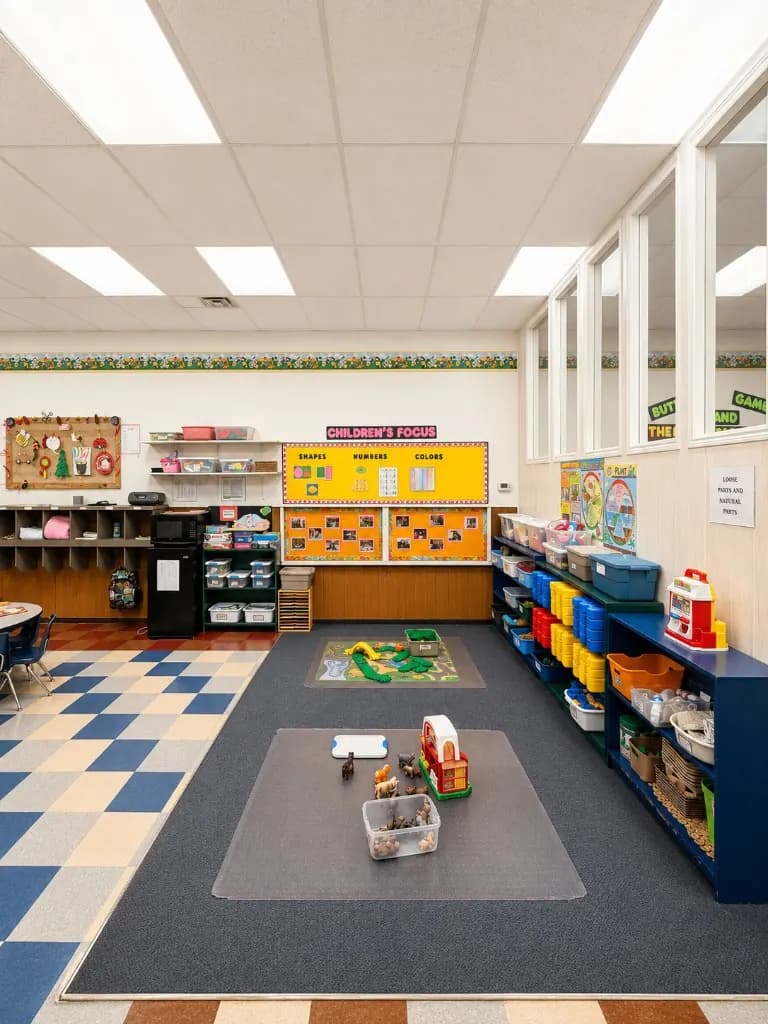
Indoor gross motor. The hallway becomes an obstacle course, we move furniture, we do music and movement, we run relay games. It is loud and it is not as good as being outside, but it does the job until the wind drops.
More on how we structure the day in our approach, and you can see the outdoor space in the centre photos.