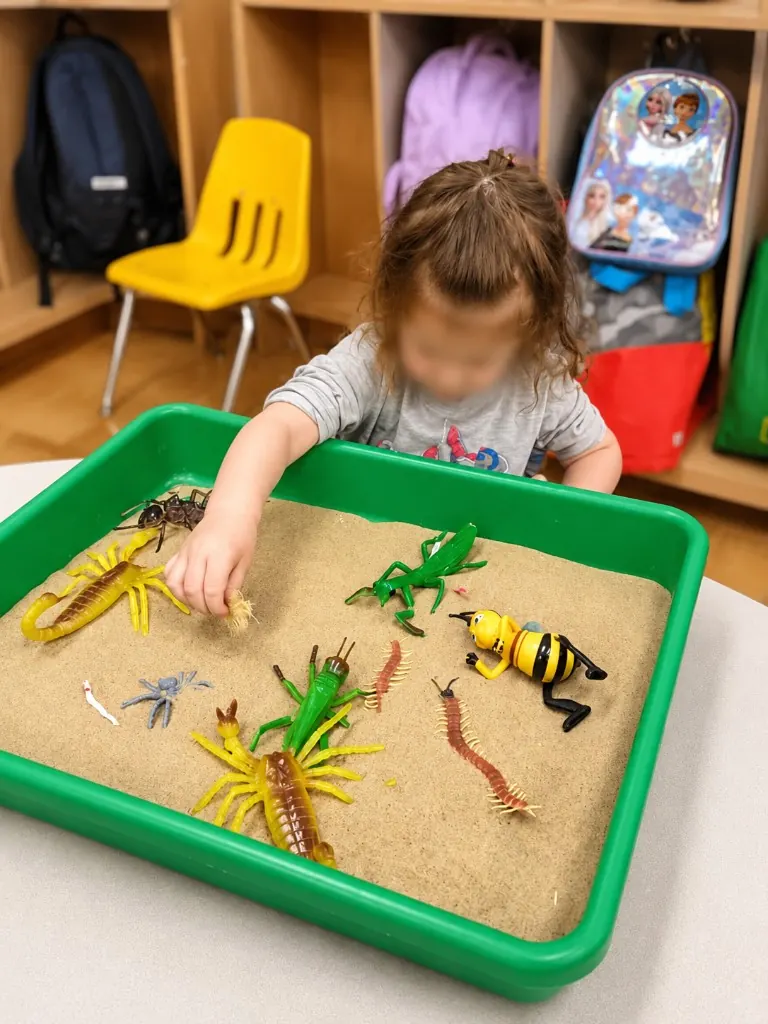
Sensory play is not just entertainment. Handling different textures builds fine motor strength, develops the tactile discrimination that later supports pencil control, and is one of the most reliably calming activities available to a young child.
Almost all of it comes from the kitchen.
Ten trays
- Dry rice with cups, scoops, and small containers. The default, and endlessly reusable.
- Dry pasta, different shapes mixed, for sorting and threading.
- Porridge oats, which behave differently from rice and are softer to handle.
- Dry lentils or split peas — smaller, so better pincer grip work.
- Flour, with a sieve and small tools. Messy. Outdoors.
- Cooked and cooled spaghetti, plain or coloured. Deeply strange and popular.
- Shaving foam on a tray, for drawing letters and shapes with a finger.
- Ice cubes with a little salt and a paintbrush of warm water, to melt channels.
- Snow, brought inside in a deep tub in January. Excellent.
- Soil and a few plastic bugs, for a digging tray.
Add scoops, tongs, funnels, and small containers to any of them.
Making it work
Put a sheet or a shower curtain underneath and accept spillage. Small quantities in a shallow tray beat a deep tub. Store dry materials in a labelled container and reuse them for months.
For a child who dislikes messy textures, start with tools rather than hands — a scoop provides distance, and they will get there.
Safety
Supervise, especially with children who still put things in their mouths. Small dry items are a choking hazard. Nothing with a nut content in a room with a nut allergy — check craft and sensory materials, not just food.
The calming effect
A dysregulated child at a sensory tray will usually settle within a few minutes. It works better than talking. We keep a tray available indoors year-round for exactly this reason.