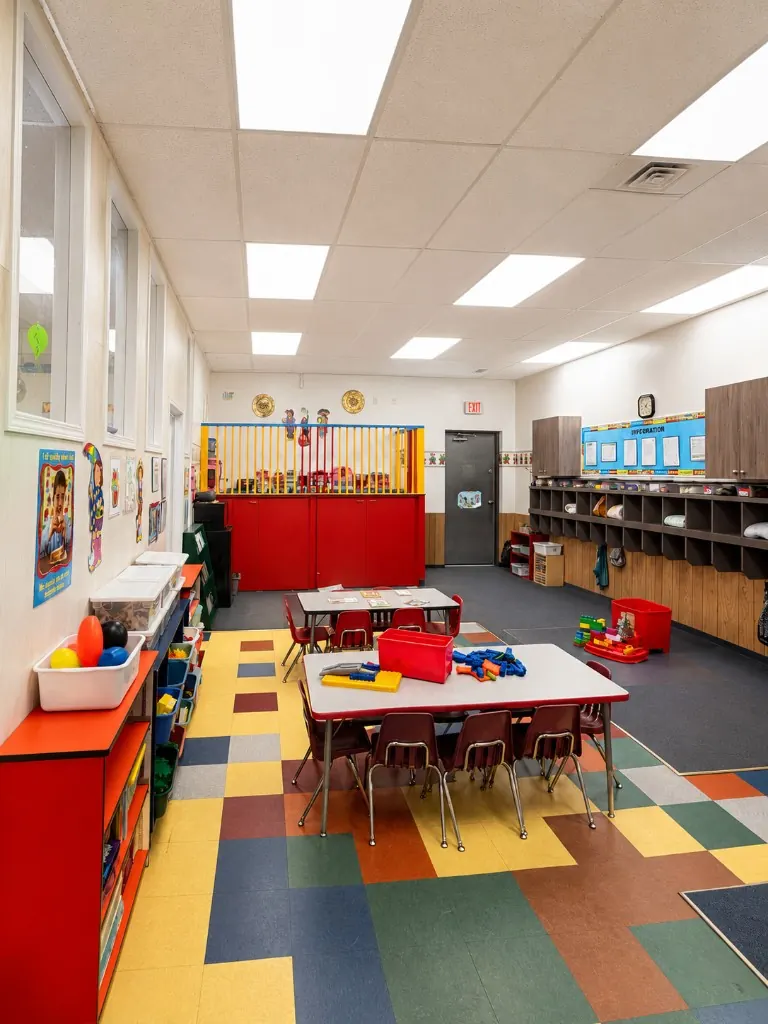
Ask a four-year-old what they did today and they may well say "played." Parents sometimes hear that as an absence of learning.
It is the opposite. Play is the mechanism by which a young child learns almost everything. Not a break from learning, and not a reward for finishing it.
What is happening during play
A group of children running a pretend shop are managing an imaginary situation collaboratively, assigning roles, negotiating rules, sustaining a narrative, handling currency, and repairing the game when someone breaks it. That is symbolic thought, social negotiation, language production, and early numeracy, at the same time, sustained voluntarily for forty minutes.
No adult-directed activity we could design would produce all of that at once, and none would hold their attention as long.
Why voluntary matters
The critical feature is that the child chose it. Motivation supplied from inside produces a completely different quality of attention from motivation supplied from outside.
Which is why a child will persist for forty minutes at a self-chosen problem and last four minutes at an adult-set task of similar difficulty. The persistence is not about the task; it is about who set it.
Where adults come in
Play-based does not mean adults stand back and watch. Our job is:
The environment. What materials are available, how they are arranged, how accessible they are. Most of an educator's influence is exercised before the children arrive.
Time. Elaborate play takes twenty minutes to develop. A schedule that interrupts every fifteen never produces it. Protecting long uninterrupted blocks is a deliberate choice.
Noticing and extending. Seeing that a group is investigating ramps and quietly adding a longer plank. Asking one good question at the right moment.
Direct teaching, where it belongs. Some things do not emerge from play. Letter sounds are the clearest case, which is why we run Academic Pre-K as a structured block. It sits inside a play-based day rather than replacing it.
What to say at pickup
Instead of hearing "I played" as nothing, try "what did you play?" and then listen for the detail. The answer is usually a long, complicated account of a social world with rules.
That is the work.