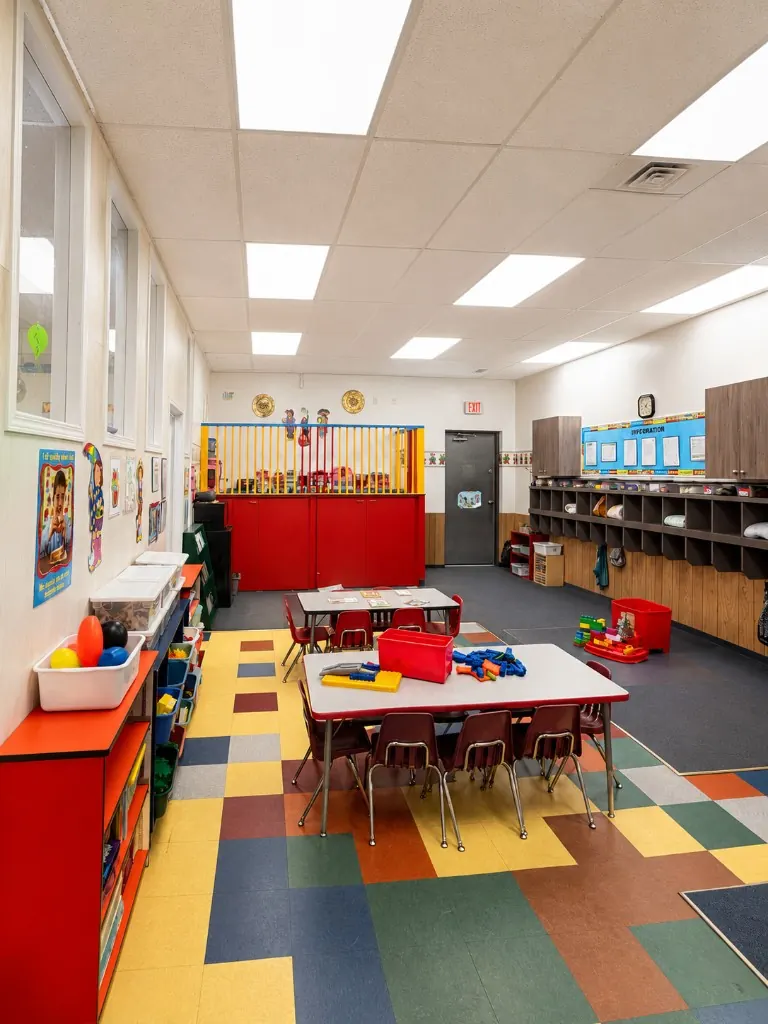
Every room here has a house corner — a toy kitchen, dress-up clothes, dolls, a table. It is the busiest area in the room most days and it is where the highest-level thinking happens.
What pretend play requires
To play shop, a child has to hold an imaginary situation in mind, agree its rules with another child, stay in a role, and use language to sustain it. That is symbolic thinking, negotiation, and narrative, all at once.
Watch closely and you will hear children doing extraordinary things: assigning roles ("you be the baby, I'll be the doctor"), setting rules ("this is the money"), and correcting each other when someone breaks the frame ("no, babies can't drive"). Managing a shared imaginary world is cognitively harder than any puzzle in the room.
The language jump
Children use different, more elaborate language in pretend play than in ordinary conversation. In role, a four-year-old will produce sentences well beyond their usual level, because the role licenses it. They borrow the vocabulary of a doctor, a parent, a shopkeeper.
This is one of the reliable ways to hear what a child is actually capable of linguistically.
Working things out
Dramatic play is also where children process real life. A child whose family has a new baby will play babies for weeks. A child who has been to hospital will play hospital. It is not a coincidence and it is not something to interrupt.
What we provide
Open-ended props rather than specific ones. A wooden block can be a phone, a sandwich, or a car; a plastic toy phone can only be a phone. Real objects where safe — actual pots, a real whisk, empty food boxes. Dress-ups that are ambiguous rather than character costumes.
And time. Elaborate pretend play takes twenty minutes to get going, so a schedule that interrupts every fifteen never sees the good stuff.
You can see the house corners in the centre photos.