Canadian guidelines suggest no screens under two and no more than an hour a day of high-quality programming for ages two to five. Almost nobody hits that, and the gap between the guideline and reality mostly produces guilt rather than change.
So here is a more useful frame. The research is much less interested in the number of minutes than in three other things.
What displaces what
An hour of screen time that replaces an hour of staring out of a car window costs a child nearly nothing. An hour that replaces an hour of back-and-forth conversation with an adult costs them a great deal.
Under five, the single most valuable input is responsive interaction with a person — the loop where a child says something and an adult responds to that specific thing. Screens do not provide it. So the question is not "how long" but "instead of what."
Whether anyone is watching with them
A three-year-old watching alone absorbs relatively little. The same three-year-old watching with an adult who says "look, he's upset — why do you think that is?" gets something closer to a book. Co-viewing changes screen time from consumption into conversation.
The half hour before sleep
This one is worth being strict about. Screens close to bedtime delay sleep onset in young children fairly reliably, and sleep debt at this age shows up as everything else — behaviour, appetite, attention, illness.
If you enforce one rule, make it no screens in the last hour before bed.
What we do here
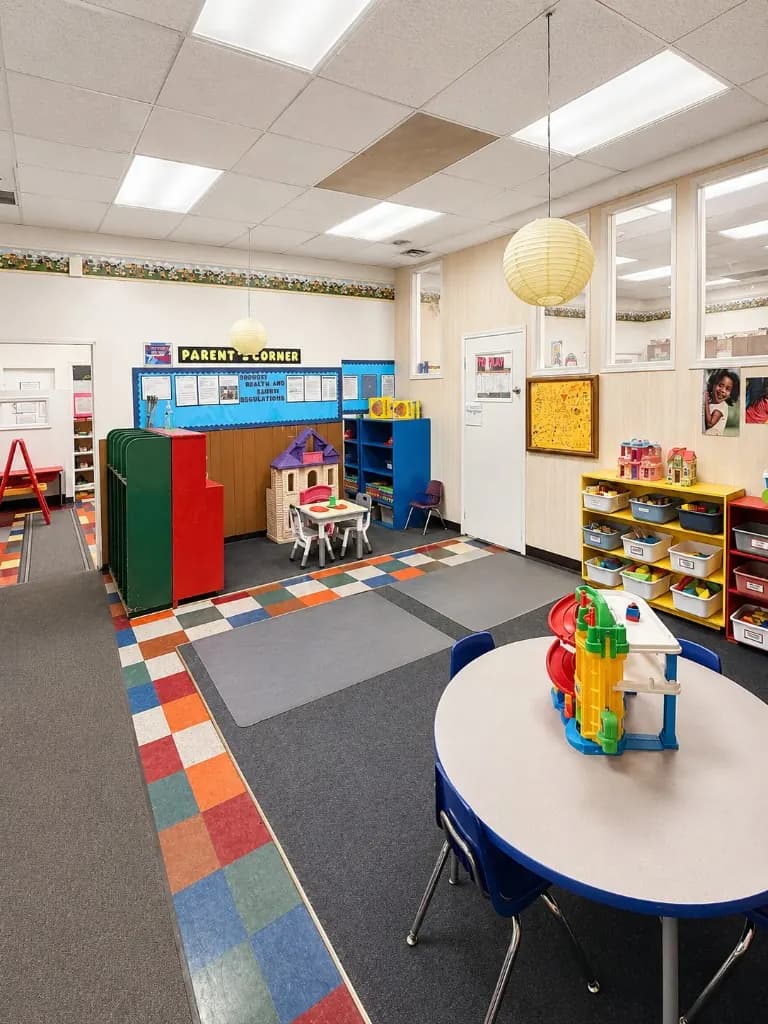
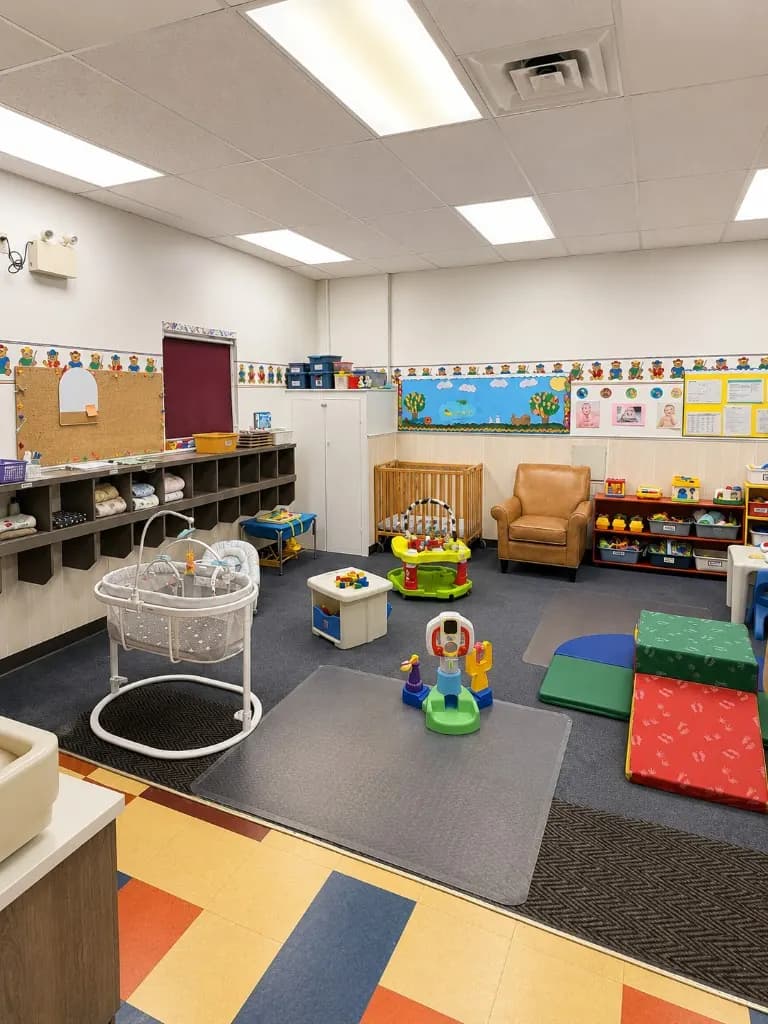
Essentially no screens, but not for ideological reasons. In a group setting there is always something better available — twelve other children, a full room of materials, and outdoors. A screen in that context would be a downgrade.
We do occasionally use a screen with purpose: looking up a real photograph of a beetle a child found, or watching thirty seconds of how a digger works because a group has questions. Used as a reference book, a screen is fine.
A practical position
Decide what your family's screens are for, and put them in specific slots rather than in the gaps. A film on Friday evening is a different thing from a phone handed over whenever a queue gets long — same total minutes, very different habit.
And be gentle with yourself about the day you needed twenty minutes to get dinner made. That is not the day that shapes anybody.