Our Academic Pre-Kindergarten program was approved this year, and it runs Monday, Tuesday, and Wednesday from 9:00 to 11:00 AM. Two hours, three mornings a week, for children aged three to five.
The first question every parent asks is a fair one: if the whole day is already full of learning, what makes these two hours different?
The honest answer: it is more structured
Most of a day at Ideal is play-based, and it should be. Children this age learn to share by having to share, and learn about volume by pouring water into the wrong-sized cup. You cannot worksheet your way to that.
But there is a narrow band of skills that genuinely benefits from being taught directly, in a small group, at the same time every morning, with a teacher who has planned a sequence rather than followed the room. Letter sounds are the clearest example. A child will not reliably discover that the letter m makes the /mmm/ sound by playing near it. Someone has to show them, several times, and then check.
That is what Academic Pre-K is for.
What the two hours look like
The morning follows the same shape every day, because predictability is what lets a four-year-old spend their attention on the content instead of on wondering what happens next.
- Circle and calendar, about fifteen minutes. The date, the weather, the day of the week, a song. This is where children practise waiting for a turn and listening to a group instruction — a bigger part of kindergarten readiness than most parents expect.
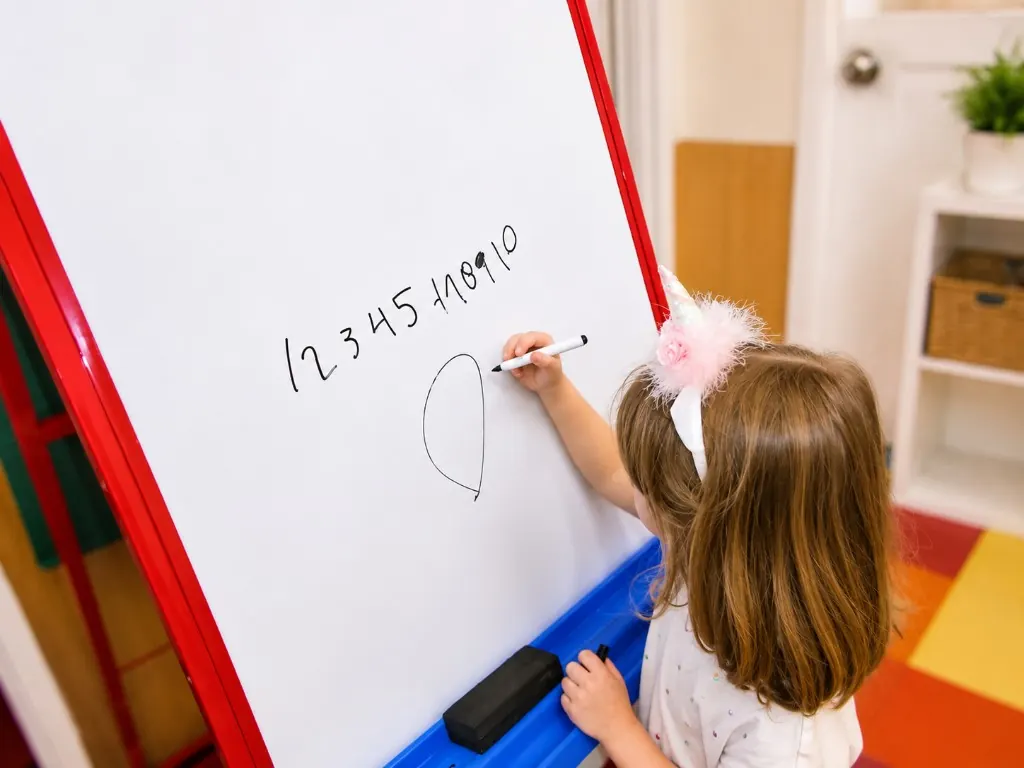
- Literacy block, about thirty minutes. One letter sound as the focus, with tracing, a matching game, and a book that leans on that sound. We move through the alphabet in an order based on how useful and how distinguishable the sounds are, not A to Z.
- Movement break, ten minutes. Non-negotiable. Attention comes back sharper afterwards.
- Math foundations, about thirty minutes. Counting with objects, sorting by one attribute and then two, recognising written numerals, and the beginnings of "one more, one less."
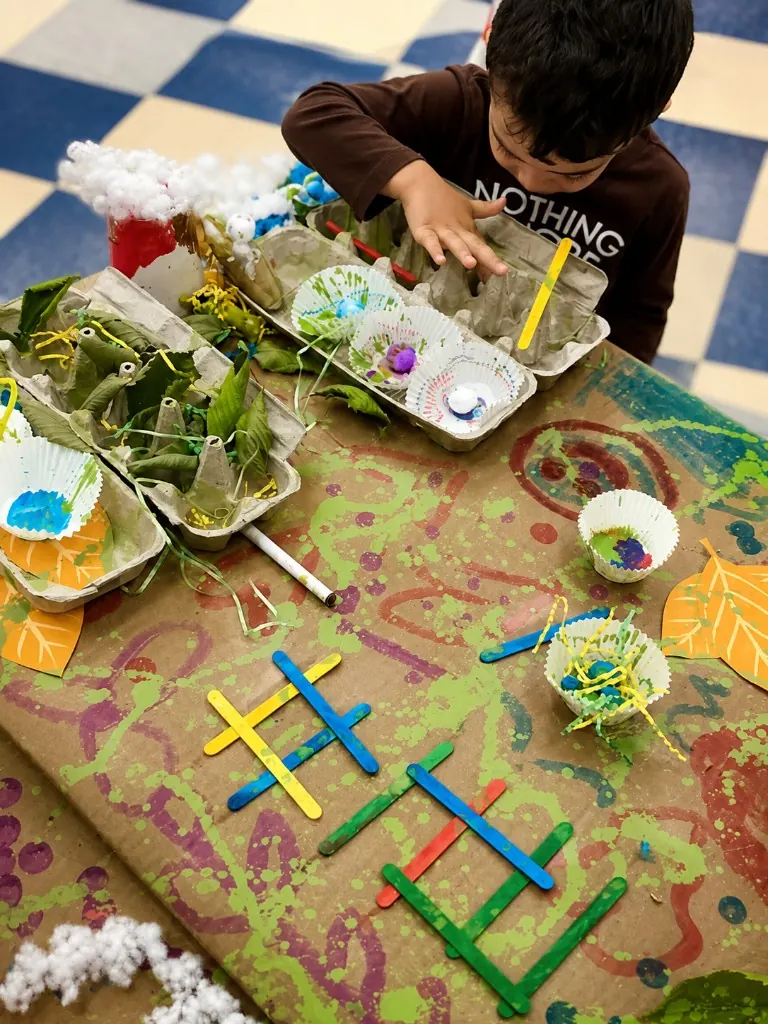
- Fine motor and creative work, about twenty minutes. Scissors, tracing, pencil grip, tearing paper, threading beads. Unglamorous and enormously important.
- Closing routine, ten minutes. Tidying their own materials, and each child saying one thing they did.
At 11:00 the children who are staying for the full day rejoin their regular room for lunch. Children who come only for Academic Pre-K go home.
Why fine motor work gets thirty of those minutes
Because it is the thing that most often catches children out in kindergarten, and almost no one mentions it.
A five-year-old who cannot yet hold a pencil in a tripod grip, cut roughly along a line, or manage a zipper will spend a meaningful part of every school day struggling with the mechanics of tasks rather than the tasks themselves. It is exhausting and it is discouraging, and it looks from the outside like a child who is behind academically when in fact their hands just have not had enough practice.
So we practise. Every single morning.
What we do not do
We do not give homework. We do not test. We do not send home a folder of completed worksheets as evidence that learning happened, because that is a display for parents rather than something useful for a four-year-old.
We also do not push a child who is not ready. A newly-three-year-old who spends the literacy block watching rather than participating is doing exactly what they should be doing. Watching is how it starts.
Who it suits
Academic Pre-K works well for:
- Children starting kindergarten in the next year or two, particularly in our neighbourhood where most children go on to Edmonton Public or Elk Island schools
- Children who are already curious about letters and numbers and are asking questions we should answer properly
- Families who want structured learning but do not want a full-day academic program, which we do not think is appropriate at this age
- Children who already attend Ideal for full-day care — they simply join the morning block, at no disruption to their day
It is less suitable for a child who has only just turned three and is still settling into being away from home. There is no rush. The program will still be here next term.
Practical details
The program runs Monday, Tuesday, and Wednesday only. You can register for one, two, or three mornings.
Class sizes are kept small. You can combine Academic Pre-K with full-day care, part-time care, or take it on its own.
If you want to see it, come on a weekday morning between 9 and 11 and watch. That tells you more than anything we can write. Book a tour or read the full program page.